Monday, January 5, 2015

Ecological Degradation


First up, what it means..

The degradation of ecosystems is an environmental problem that diminishes the capacity of species to survive. This degradation occurs in different ways and is manifested in a reduction in the richness of the ecosystems as well as their biological diversity, and in the goods and services they can offer, thereby affecting indigenous and/or migratory species. The degradation of ecosystems due to overexploitation of their resources, though serving a short-term economic goal, has had direct negative effects on social welfare in the medium and long terms. As long as the ecosystem is not degraded, it represents a source of wealth for society, hence the importance of keeping it in good condition.

This photo was taken somewhere in my neighborhood, as you notice the ground looks sandy and not that suitable (they still survive anyway so yay!) for these trees but these continue to fight to survive, and if you take a look, its leaves are healthy and green. My neighborhood can help improve the chances of these living if we would take care of our environment, like for example, cleaning the trashes in our environment, taking out the dried leaves, taking out the weeds that steal the nutrients that the trees need.

Everyone, let us make our environment green and clean, to make our future generations will live a healthier and greener life. 

Sunday, January 4, 2015

Videos on how to save our environment and what we can do to help each other

This video shows us how we can save our environment in our very on ways

This video shows us some of the endangered species in the Philippines so if ever we come in contact with those creatures, we wouldn't harm them in any way

After reading all this, let us all make a difference to make our environment clean and green !

Saturday, January 3, 2015

Top 5 Endangered Species in the Philippines

Endangered Animals in the Philippines

Philippine Eagle

The Philippine eagle (Pithecophaga jefferyi) also referred to as monkey-eating eagle, is an eagle subspecies that belong to the family of Accipitridae and is native to Philippine. These eagle display white-colored plumage together with the shaggy crest, averaging 86 – 102 cm (2 ft 10 in to 3 ft 4 in) in length. The weight of these species measure around 4.7 – 8 kg (10 – 18 lb). As far as the eagle’s length is concerned, Philippine eagle is the largest, harpy eagle and the stellar’s sea eagle being the other contenders. They are also regarded as the rarest and the most powerful birds in the world. Philippine eagle is also the national bird of Philippine. One of the foremost causes of the population decline is habitat loss or deforestation.
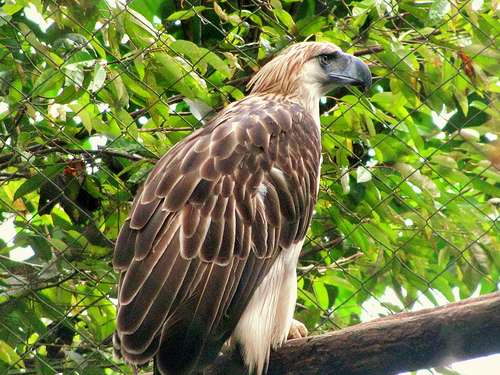
monkey-eating eagle - Endangered Animals in the Philippines  Philippine Eagle
Philippine Eagle

Philippine Spotted Deer

Philippine spotted deer (Rusa alfredi) also known as Visayan spotted deer, is an endangered species of deer that inhabits all along the islands of Panay and Negros. These are nocturnal animals and are known to reside all throughout the islands of Leyte, Samar, Cebu, Masbate and Guimaras. According to a survey conducted by the IUCN in 1996, there were around 2,500 species in the world. Scientists aren’t sure about how many species are exactly left now. These deer primarily feeds on leaves, buds, and grasses.
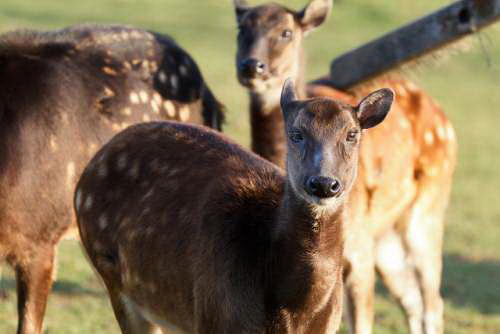
Philippine spotted deer (Rusa alfredi) Visaya - Endangered Animals in the Philippines

Philippine Freshwater Crocodile 

The Philippine freshwater crocodile (Crocodylus mindorensis), also called Mindoro crocodile is a subspecies of crocodile that inhabits all throughout the Philippine. These crocodiles are considered to be critically endangered species due to unsustainable fishing. They have wide and thick bony plates. They can grow to a length of 1.5 meters (4.9 feet), and weighs around 15 kg (33 lb). The males are fairly larger than females.
Philippine Freshwater Crocodile  - (Crocodylus mindorensis) - Mindoro crocodile - Endangered Animals in the Philippines
Philippine Freshwater Crocodile by Gregg Yan Source:http://en.wikipedia.org/wiki/File:Crocodylus_mindorensis_by_Gregg_Yan_01.jpg

Tamaraw 

The tamaraw (Bubalus mindorensis) also known as Mindoro dwarf buffalo is a small mammal that belongs to the family of Bovidae. These animals are native to the Mindoro Island. They are found at a level of 2,000 meters above sea level. Tamaraw is critically endangered species as they were subject to extreme hunting, habitat loss, and logging. The population of these species are now limited to few grassy plains.
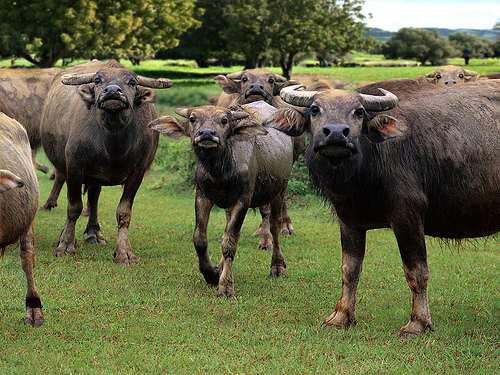
Tamaraw  Endangered Animals in the Philippines
Tamaraw
source: http://kwentongpinas.wordpress.com/2008/05/

Philippine Tarsier 

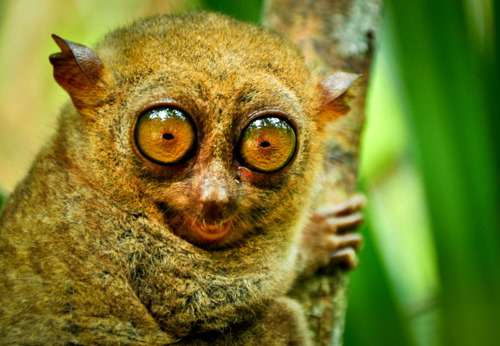
The Philippine tarsier (Carlito syrichta) also called Luzon is an endangered species that is endemic to the Philippines. These animals are found in the south-eastern region of archipelago. Philippine tarsier is also the inhabitant of the islands of Leyte, Boho, Samar, and Mindanao. Some of these species are known to reside in Siagao Island, Dinagat Island, and Maripipi Island. The length of the Philippine tarsier measures around 118 – 149 mm, with weigh measuring at 113 – 142 grams.
Philippine Tarsier - Endangered Animals in the Philippines

My Personal Insights

The Philippines has many variety of species which can only be found here. Before, there were a lot of these animals here in the Philippines, but because of modernization, illegal logging, and all other actions has greatly thinned the number of species here in the Philippines which results to their endangerment. 

If these illegal actions would continue then the beauty of the Philippines would disappear and a lot of people don't want that to happen (like me). Some things the people should do in order to preserve these beautiful creatures in the Philippines is to plant new trees to the ares that have been cut down so we would have plentiful trees which also means home for the animals and is also equal to more animals.

In my little ways, I could help restore the glory of these animals by cleaning up my environment because if my environment is clean then other people would follow as well and soon enough the government officials will notice it and now take care of the forests and make sure no illegal logging will happen and it might dramatically increase the chances of the animals here to survive.

SOURCES


Environmental Problems in the Philippines

Saving precious remains

There are few signs today of the Philippines' once sprawling rainforests. With a growing trend in human population, it is hoped that the country's marine environment will not suffer the same fate.
Overfishing and destructive fishing

Fishers in the Philippines are increasingly coming home with pitiful catches. Of a number of factors which have led to this situation, one stands out: over-fishing in many areas. According to the Asian Development Bank (ADB), there has been a drop of 90% in the quantity of marine organisms that can be trawled in some traditional fishing areas of the Philippines.

This isn’t just a question of declining fish stocks and biodiversity, but also of social impacts and economic losses. Mismanagement of fisheries resources is estimated to cost US$ 420 million annually in lost revenues.

At the root of the overfishing problem is weak fisheries management, ineffective policies and poor enforcement of fishery laws.
Coastal infrastructure development

Coastal zone development has been particularly damaging to the Philippines’ marine environment, especially to coral reefs, mangroves, and seagrasses.

As populations have increased, so have their needs for construction materials and living space. Excavation, dredging, and coastal conversion to accommodate coastal development have seen corals being extracted for reclamation and construction, especially in coastal villages.

Mangroves have particularly suffered from coastal development, notably at the hands of the aquaculture industry. In the Philippines, aquaculture has reduced mangrove stands to only 36% of 1900 levels.
Coastal littering. Philippines. / ©: WWF-Canon / Jürgen FREUND
© WWF-Canon / Jürgen FREUND
Deforestation

After decades of deforestation, which has left about 3% of the original cover, forests continue to be under threat from agriculture and urbanization, illegal logging and forest fires.

Sustained forest loss in the Philippines is causing severe soil erosion, and is threatening the country’s rich biodiversity. This is particularly worrying as many of the Philippines’ species, which depend on these forests, are endemic (they cannot be found anywhere else in the world). For example, of 180 native terrestrial mammal species here, about 61% are endemic.

Inconsistent laws, inadequate regulations, weak enforcement and lack of funding are making forest conservation a major challenge.
Pollution

Only about 10% of sewage in the Philippines is treated or disposed of in an environmentally sound manner. The rest goes back to nature – usually the sea.

In this context of poor waste treatment and high population growth, water pollution is a growing problem for the country’s groundwater, rivers, lakes, and coastal areas. Polluting industrial material is also found in abandoned mining areas, with mercury pollution affecting water bodies in these areas.

These problems are unfolding in a context of poor planning, and weak management and enforcement of regulations. 
My Personal Insights
Now this article came from the WWF (World Wildlife Fund) which talked about the environmental problems in the Philippines. Now what I've learned based on what I read is that if these problems would continue, Philippines very vast biodiversity wouldn't be that diverse anymore due to the fact that these problems really affect a lot of animals who are living here in the Philippines. You can see that our government should take much more responsibility in taking care of our forest, seas, and animals because they are one of the factors that makes our country beautiful and A LOT of the animals here in the Philippines cannot be seen in other places and we should be proud of that and take care of those animals. 

I would suggest our government should implement strict laws to ensure the safety and preservation of our natural resources and to make sure the children of the future would still be able to see the magnificent creatures that live ONLY in the Philippines. 
In my own little ways I could help the people who are trying really hard to preserve out natural resources by doing the REDUCE, REUSE, RECYCLE method so that I wouldn't waste anything or at least reduce the amount of waste I bring to the environment. I could also tell my friends, family, and relatives about what I've learned so that they too would follow what I've been doing and make our environment cleaner and greener.

SOURCES: